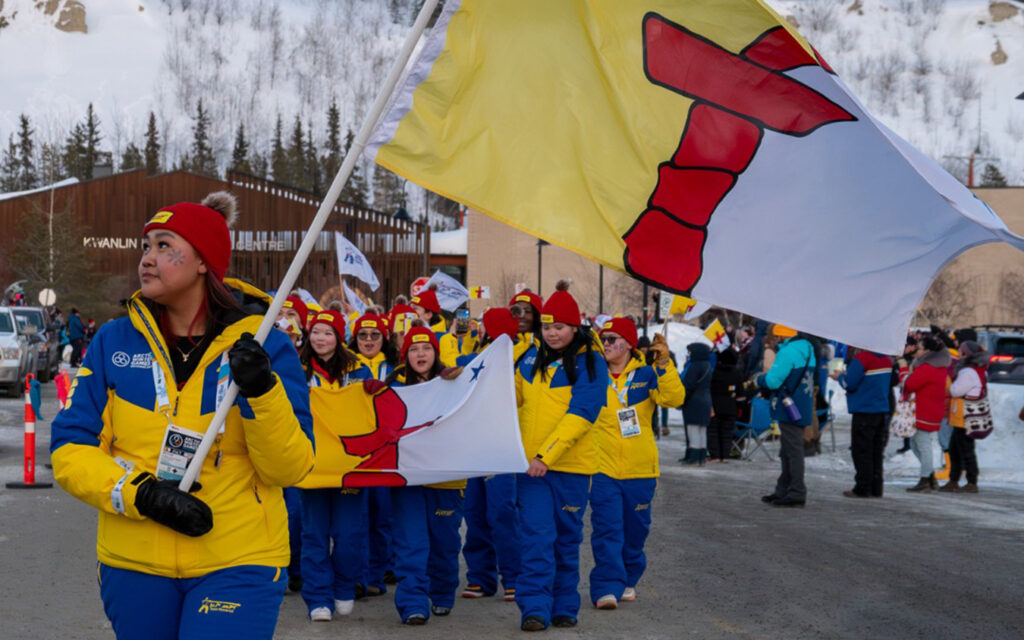
From a small club in Iqaluit to the big stage of the Arctic Winter Games in Whitehorse, Inuit Games are helping athletes bring back a strong sense of shared spirit and culture.
In the past, during long, dark winters, Inuit and other Indigenous people across the North played traditional games to stay active, build strength, and sharpen their skills as an important part of survival. Although much of that traditional way of life has changed, Inuit games, also known as Arctic sports, continue to keep people connected to their culture while building resilience, community, and pride.
For nearly three decades, Susie Pearce, from the Qikiqtaaluk Region in Nunavut, has represented her home at the Arctic Winter Games, first as an athlete and now as a coach. Pearce, her daughter, and family members started a small, informal club to bring people together and revive interest in the games. Over time, their efforts paid off, and four members of their club, including her daughter, qualified for the Arctic Winter Games in 2026.
The Arctic Winter Games were first held in Yellowknife in 1970, hosting around 500 athletes from three contingents, namely, Alaska, Yukon, and the Northwest Territories, in sports such as hockey, curling, basketball, and volleyball. In 1974, the Arctic Winter Games were held in Anchorage and included Inuit games for the first time. In the past 50 years, the event has grown into a major gathering, with 2,000 athletes from eight different regions coming together in Whitehorse in March 2026 to compete in 20 sports and cultural activities.
More than the competition, the games celebrate both sport and culture, where athletes compete but also support each other, offering advice and encouragement. Participants say it feels like a big family, not just a competition.
Source: Dustin Patar, The Globe and Mail